
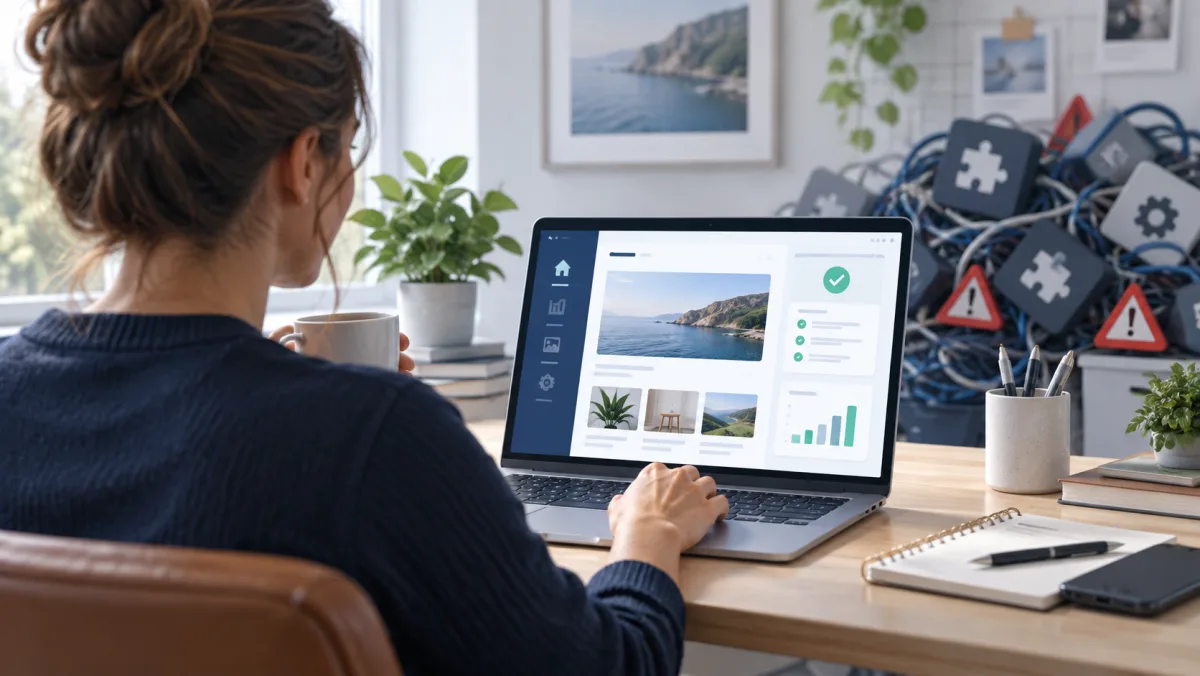
It started so innocently.
You needed a website. WordPress was everywhere—powers 40% of the internet, they said. Tons of plugins. Thousands of themes. A huge community for support.
Fast forward to now, and you’re watching your blood pressure rise every time you see a notification from your hosting company.
The Plugin Problem
WordPress itself is relatively stable. The nightmare comes from everything you add to make it actually useful.
Contact form? Plugin. SEO? Plugin. Backup? Plugin. Security? Plugin. Speed optimization? Plugin. That slider someone convinced you to add? Plugin.
Each plugin is made by different developers, on different schedules, with different coding standards. They don’t talk to each other. They don’t coordinate updates. And when one conflicts with another—or with WordPress itself—things break.
Sometimes quietly. (Your contact form stopped working three weeks ago and you just found out.)
Sometimes loudly. (White screen. Site down. Client called to tell you.)
You didn’t sign up to be a systems administrator. You signed up for an “easy” website.
The Update Treadmill
Here’s the cycle:
- WordPress releases an update
- Your plugins may or may not be compatible
- You update (because security), something breaks
- You spend hours figuring out which plugin caused it
- You find a workaround or wait for a fix
- Repeat every few weeks
Skip the updates? Now you’re vulnerable to security exploits. There’s a reason WordPress sites get hacked constantly—most people fall behind on updates because updates keep breaking things.
It’s a trap with no good options.
The Cost Is More Than the Repair Bill
The obvious cost is the time spent troubleshooting. The less visible cost is what gets postponed while you are doing it: customer work, estimates, scheduling, and the updates your website actually needed.
That is why recurring website problems are not just a technical nuisance. If every content change risks a broken layout or plugin conflict, the site becomes harder to keep accurate and useful. Eventually, business owners stop touching it and stale information accumulates.
There Is an Exit
The WordPress ecosystem wants you to believe that the problems are manageable. Buy better hosting. Use fewer plugins. Learn more about optimization.
But here’s the thing: the architecture itself is the problem. WordPress was built in 2003 for blogging. It’s been Frankensteined into a “platform for everything” through plugins and themes that were never designed to work together.
You can’t optimize your way out of a fundamental design problem.
The exit is simpler: a website that doesn’t need WordPress at all.
Hand-coded. No plugins. No theme conflicts. No update Russian roulette. Just clean, fast code that does exactly what it’s supposed to do.
When I build a site, there’s nothing to conflict because there’s nothing bolted on. Updates don’t break things because there’s no dependency chaos.
And when you need maintenance? You tell me. I handle it. You never touch it.
If the problems go beyond WordPress updates, review the broader reasons small-business websites fail.
Ready to wake up from the nightmare? Learn about website management or talk to me about your current site.